Chronic Pain
- Welzack Chapter 13 Autonomic, Endocrine, and Immune Interactions in Acute and Chronic Pain1
Definition
Problems with traditional acute/chronic classification
Traditionally, Acute vs chronic pain has been defined based on an arbitrary time frame (3mo or 6mo)ballantyneBonicaManagementPain2019?. These criteria do not take into consideration
- Intensity of painballantyneBonicaManagementPain2019?
- SeverityballantyneBonicaManagementPain2019?
- Nature of its impact on functioning or treatment-seeking behaviorsballantyneBonicaManagementPain2019?
- Whether pain must be present every dayballantyneBonicaManagementPain2019?
- How frequent it occurs in this intervalballantyneBonicaManagementPain2019?
New Classification
A new classification was proposed conceptualizing acute and chronic pain on two dimensions: time and physical pathologyballantyneBonicaManagementPain2019?
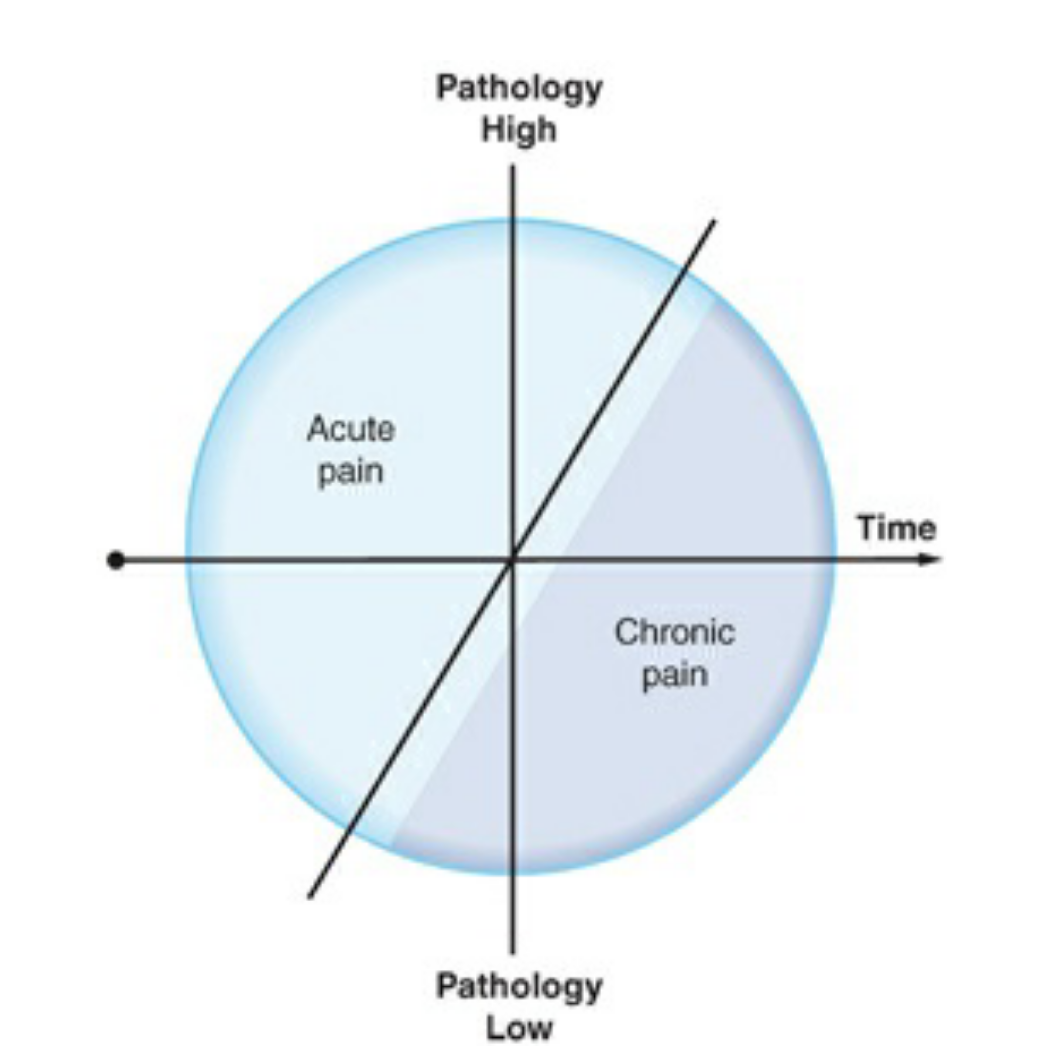
New Definition
May be elicited by an injury or disease but is likely to be perpetuated by factors that are both pathogenetically and physically remote from the originating causeballantyneBonicaManagementPain2019?. Chronic pain extends for a long period of time and/or represents low levels of underlying pathology that does not explain the presence and extent of pain (e.g., mechanical back pain, fibromyalgia [FM] syndrome)ballantyneBonicaManagementPain2019?. There have been suggestions that chronic pain in the apparent absence of pathology may be attributable to modification of nerves and sensitization of the peripheral or central nervous systemballantyneBonicaManagementPain2019?. There have also been suggestions that genetic factors and prior life experiences might predispose some to develop chronic pain problems following an initiating insult that resolves in others who do not have the predispositionballantyneBonicaManagementPain2019?. Just as the brain is modified by experience, especially in early life, the brain may alter the way noxious information is processed to reduce or augment its impact on subjective awarenessballantyneBonicaManagementPain2019?. Chronic pain frequently is the impetus for people to seek health care. Currently available treatments are rarely capable of totally eliminating the noxious sensations and thereby “curing” chronic painballantyneBonicaManagementPain2019?. Because the pain persists, it is likely that environmental, emotional, and cognitive factors will interact with the already sensitized nervous system, contributing to the persistence of pain and associated illness behaviors (see following description of pain behaviors)ballantyneBonicaManagementPain2019?. It is also possible that, just as the brain is modified by experience, especially in early life, the brain may alter the way noxious information is processed to reduce or augment its impact on subjective awarenessballantyneBonicaManagementPain2019?.
Examples
- Fibromyalgia
- Bodily distress syndrome
- Postherpetic neuralgia